An IoT platform is the bridge connecting the physical and digital worlds. Traditional device management suffers from opaque device status, difficult data collection, and inefficient remote operations — and the lack of a unified platform for device management and data collection only makes things worse.
This IoT platform provides a complete Internet of Things solution, covering the full chain of Device Management → Thing Model → Data Collection → Rule Engine → Alert Management → OTA Upgrade, enabling digital transformation and intelligent operations for devices.
Platform Architecture and Core Features
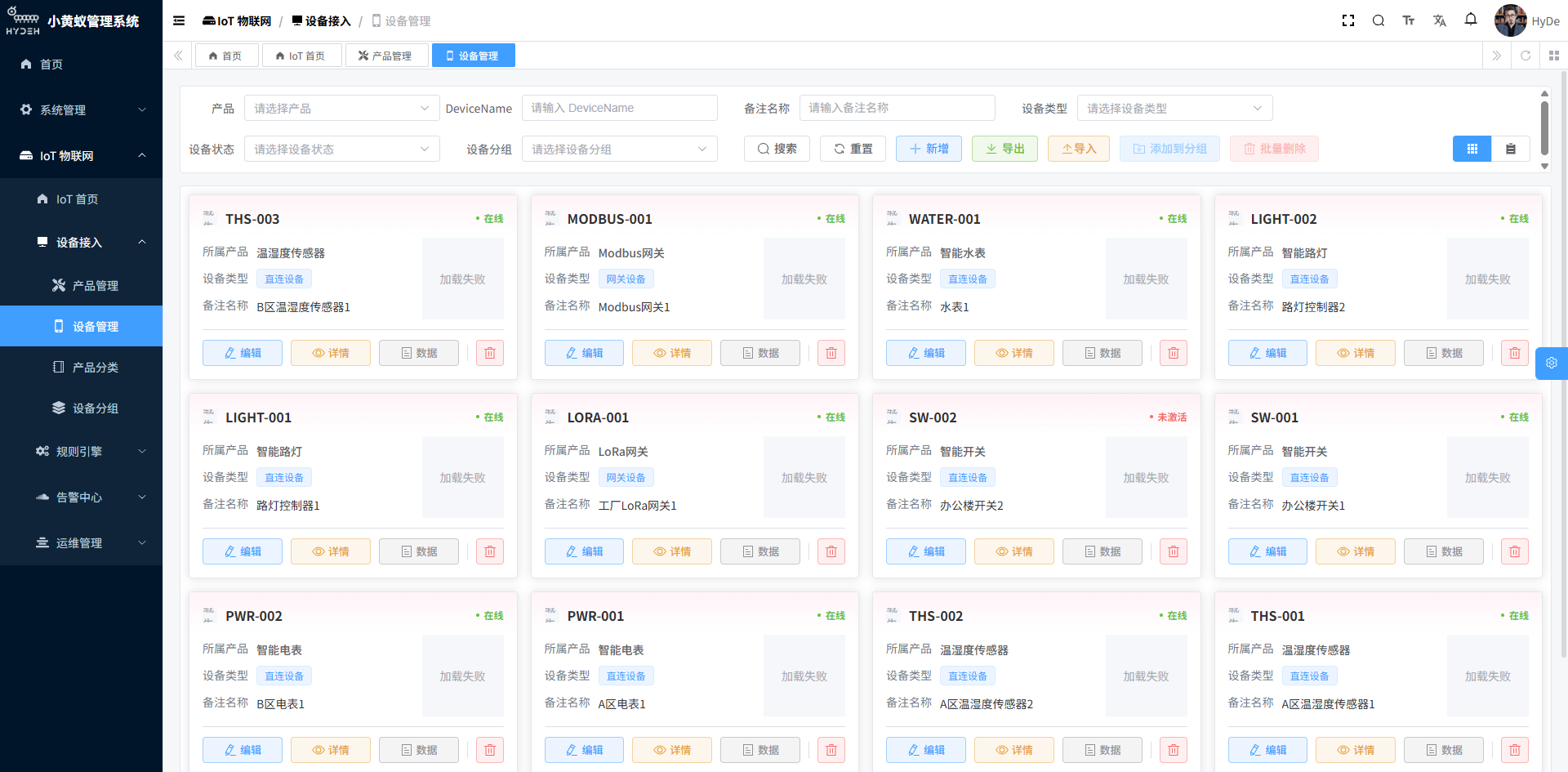
1. Device Management
Full lifecycle management of devices, covering the entire flow from device registration, authentication, and connection to data reporting and device decommissioning.
- Device Registration: Supports bulk import and manual registration, generating a unique device identifier (DeviceKey)
- Device Authentication: Device secret-based authentication to ensure secure device access
- Device Connection: Supports multiple protocols such as MQTT and HTTP, compatible with different communication scenarios
- Device Status: Real-time display of device online/offline status with online/offline event logging
- Device Grouping: Group and manage devices by project, region, type, and other dimensions
- Device Mapping: Associates products with thing models, automatically inheriting the properties, events, and services defined by the product
2. Thing Model
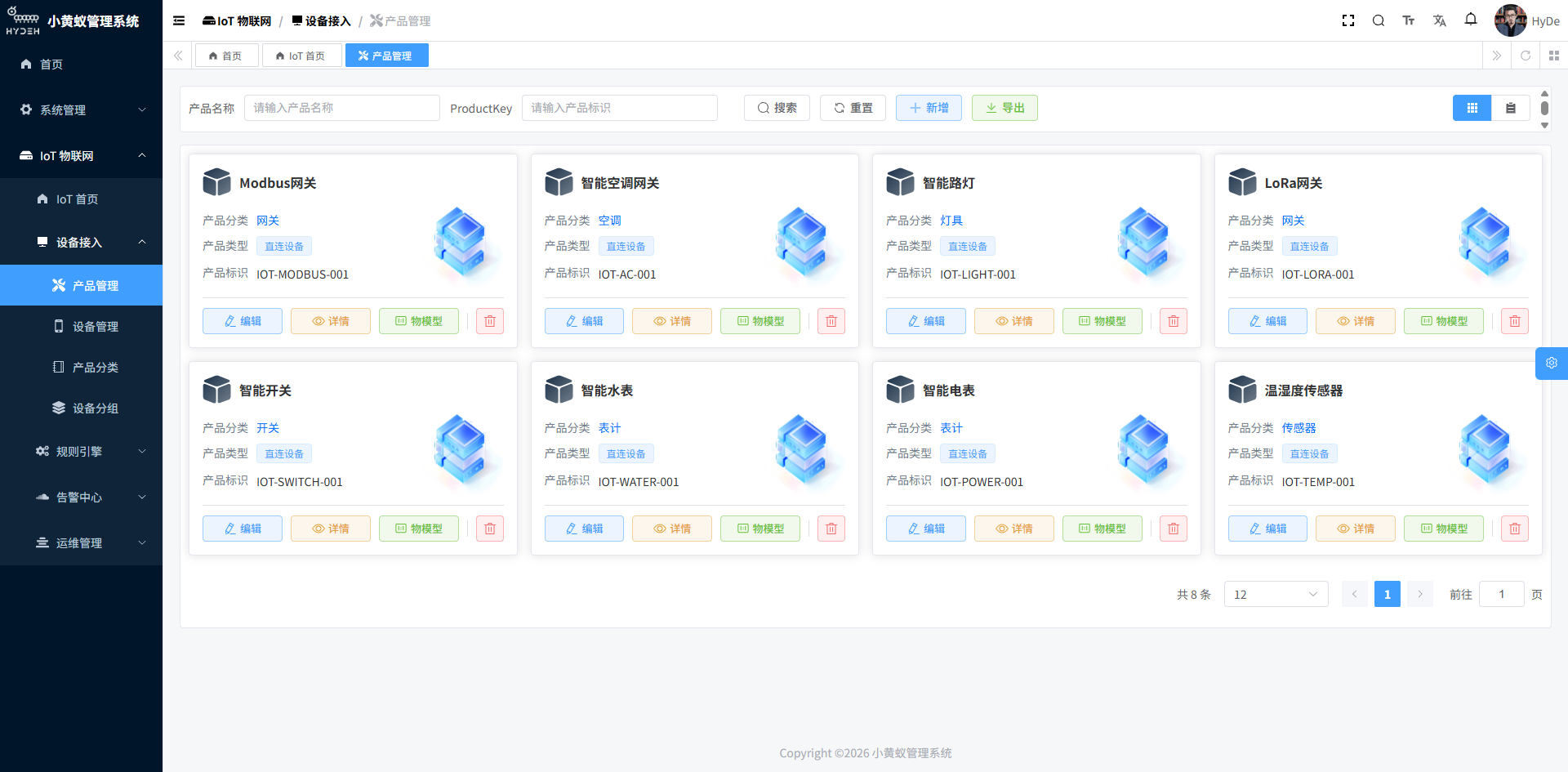
The thing model is the core abstraction of the IoT platform, transforming physical devices into digital twin models that define device capabilities. A product is the carrier of a thing model — devices of the same model belong to the same product and automatically inherit its thing model definition.
- Product Management: Define product category, communication protocol, and data format, and associate with a thing model
- Property: Runtime status data of the device (such as temperature, humidity, voltage, switch status, etc.), supporting both reading and setting
- Event: Event notifications generated during device operation (such as fault alerts, threshold violations, device restart, etc.)
- Service: Remotely callable device capabilities (such as remote restart, parameter configuration, firmware upgrade trigger, etc.)
The thing model is defined using a standardized JSON Schema, ensuring structured and interoperable device data.
3. Data Collection
The platform connects to multiple data collection channels to achieve real-time aggregation and storage of device data:
- MQTT Collection: Receives device-reported data via MQTT Brokers such as EMQX, suitable for scenarios with high real-time requirements
- HTTP Collection: Receives device data through HTTP APIs, suitable for simple integration scenarios
- Time-Series Data Storage: Based on the TDengine time-series database, efficiently storing and querying massive volumes of device time-series data
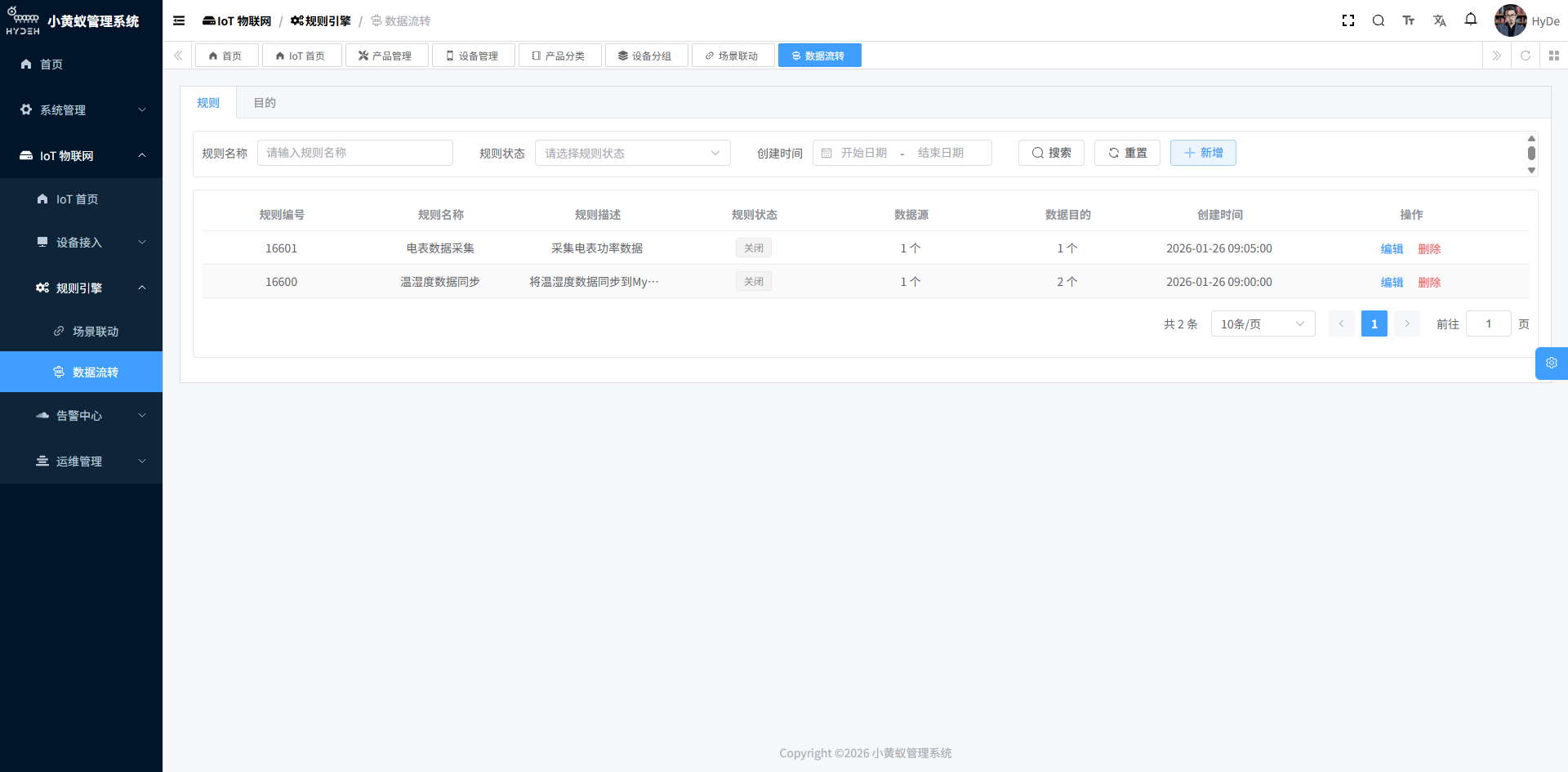
- Data Forwarding: Configure data forwarding rules to route device data to specified targets (business systems, storage, third-party platforms)
- Data Visualization: Display historical device data trends through charts, supporting custom time ranges and data aggregation
4. Rule Engine
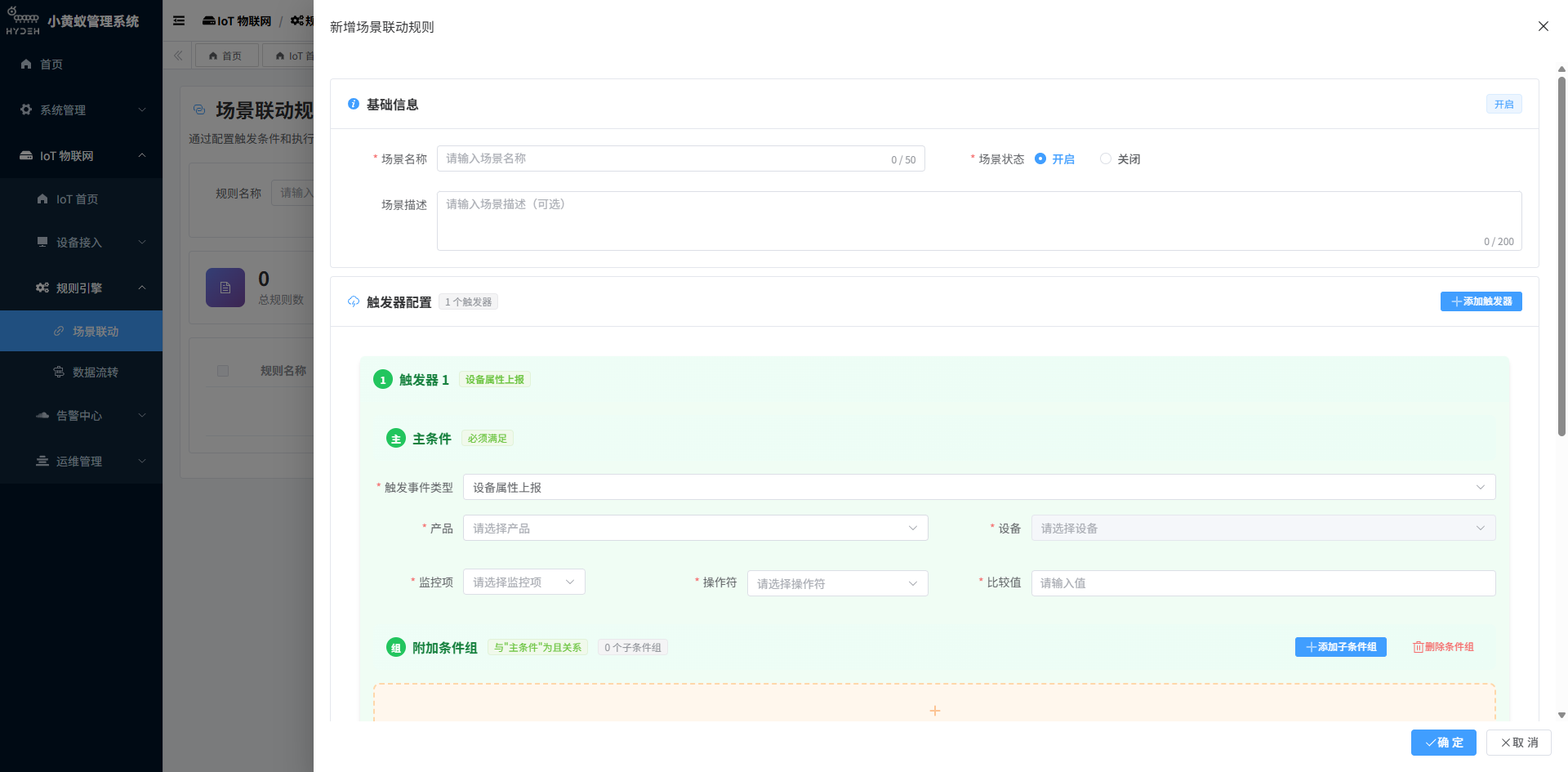
The rule engine enables flexible processing of device data and scenario linkage to meet complex automation control needs:
- Scenario Linkage: Cross-device linkage control (e.g., automatically turning on cooling equipment when the temperature is too high)
- Conditional Filtering: Filter and process data based on conditional expressions
- Action Execution: Supports multiple action outputs (HTTP callbacks, MQTT downlink commands, alert triggering, etc.)
- Data Forwarding: Forward device data to other systems (such as MES, ERP, business systems)
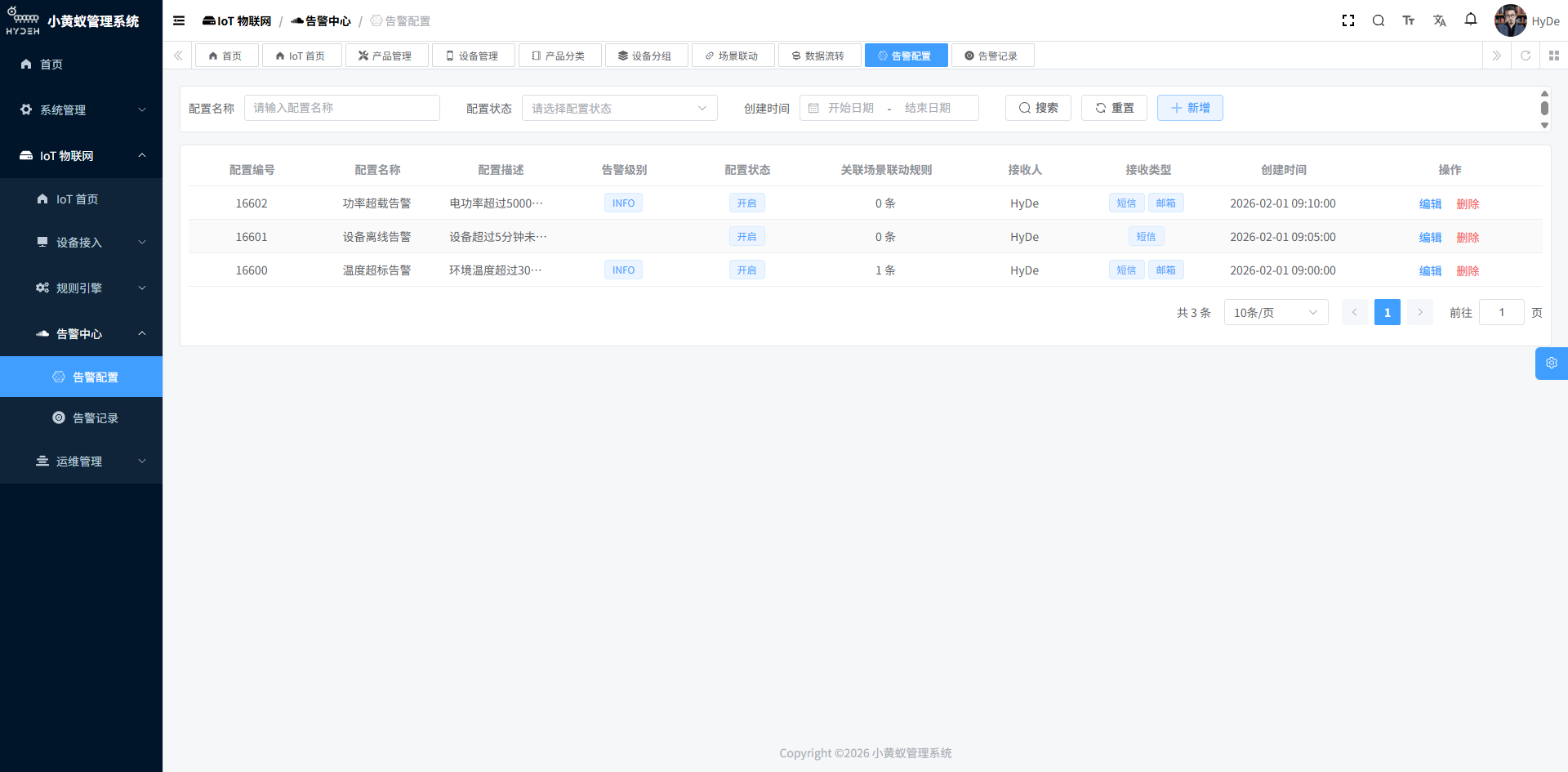
5. Alert Management
Real-time monitoring and alert notifications for device anomalies, ensuring faults are detected and handled promptly:
- Alert Rules: Configure alert rules based on thing model properties (e.g., temperature exceeding a threshold)
- Alert Levels: Supports multi-level alerts (Warning, Critical, Emergency)
- Alert Notifications: Supports multiple notification channels such as in-app messages, SMS, and email
- Alert Records: Complete records covering the entire alert lifecycle from generation to acknowledgment to recovery
6. OTA Upgrade (Over-the-Air)
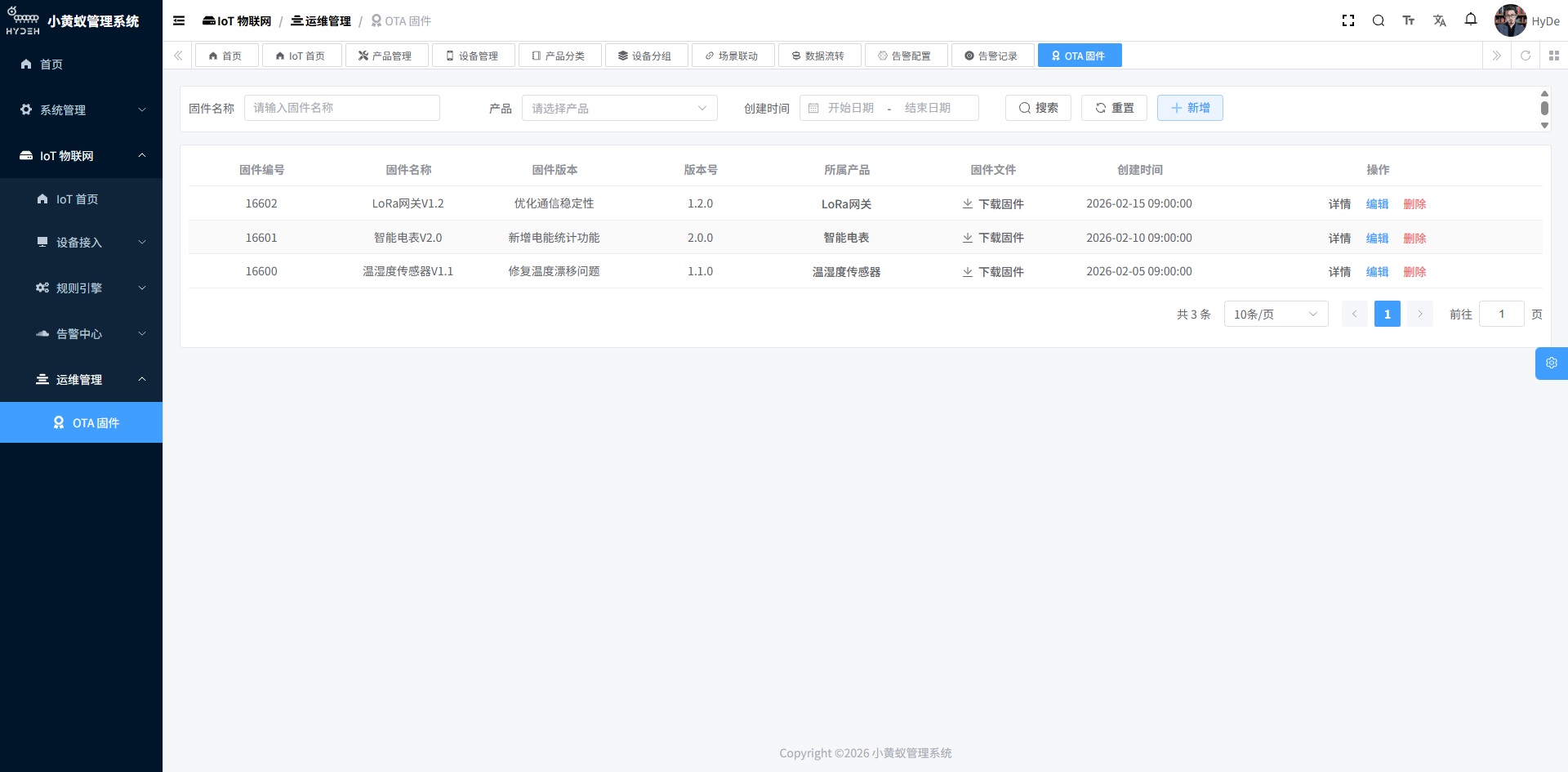
Supports remote firmware upgrades for devices, enabling continuous feature iteration:
- Firmware Management: Upload and manage device firmware versions, maintaining version release records
- Upgrade Strategy: Supports upgrade strategies by device, by batch, and by region
- Upgrade Monitoring: Track upgrade progress and results in real time, viewing the upgrade status of each individual device
- Version Rollback: Automatic rollback upon upgrade failure to ensure stable device operation
7. Dashboard
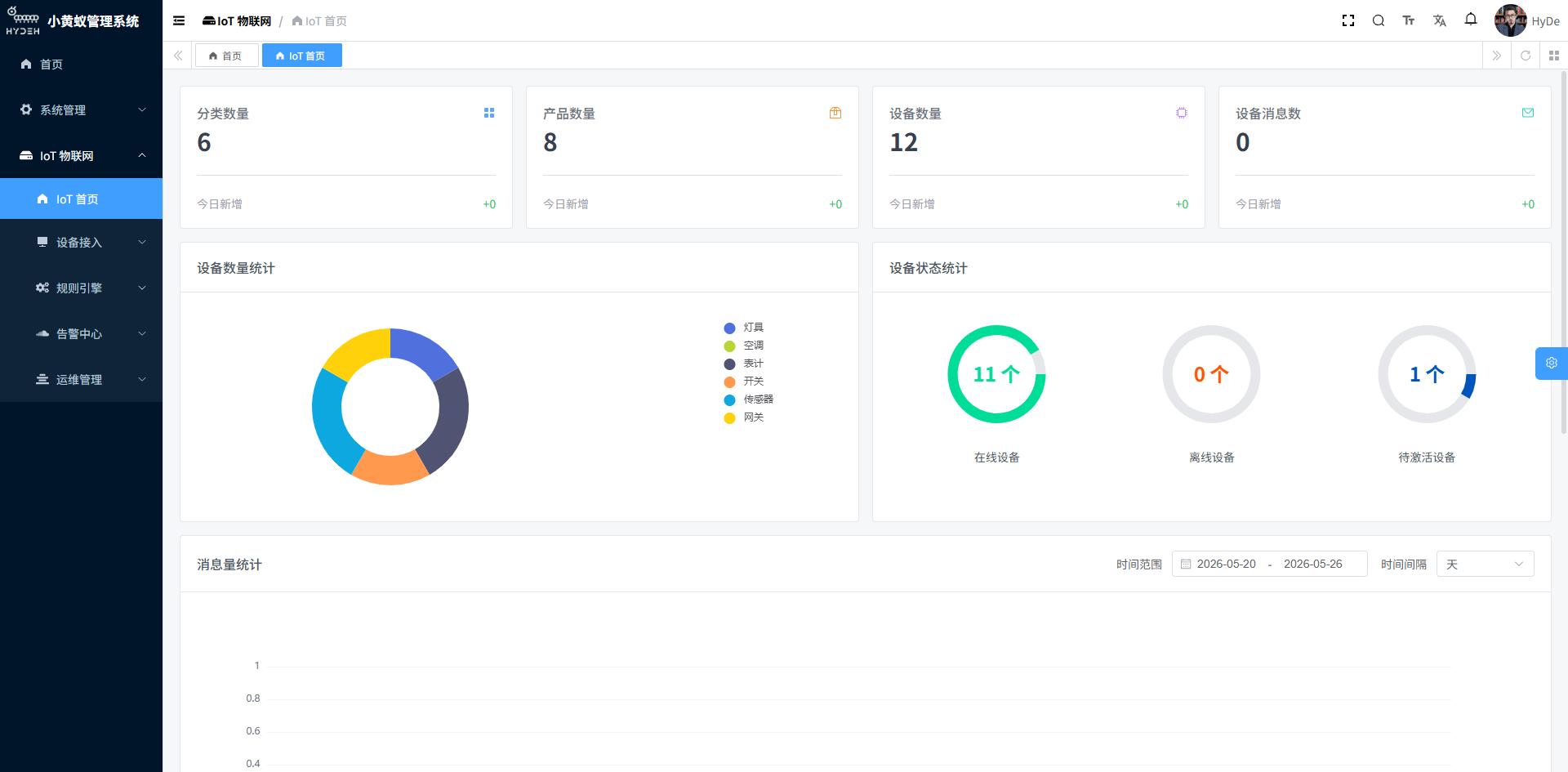
The system provides an intuitive data statistics dashboard, helping managers quickly grasp the operational overview of the IoT platform:
Technology Stack
Spring Boot + Spring Cloud
MQTT / HTTP
TDengine
EMQX / RocketMQ
Vue 3 + Element Plus
Monolithic / Microservices
Live Demo: https://www.hydeh.com/boot/
Tenant: IoT | Username: iottest | Password: iottest
After logging in, you can experience device management, thing models, data collection, and other features under the “IoT System” menu.