Small and medium-sized enterprises often struggle with data silos in inventory management: the procurement team uses one spreadsheet, the warehouse another, and finance yet another. Month-end reconciliation becomes time-consuming and error-prone, inventory turnover stays slow, and cost accounting remains inaccurate.
This ERP system bridges the entire Procurement → Inventory → Sales → Finance chain to deliver unified management across four core modules:
End-to-End Business Workflow
1. Procurement Management (Purchase)
Procurement is the starting point of an enterprise’s supply chain. The system supports the complete closed loop from supplier management to purchase orders, goods receiving, and return-and-refund processing.
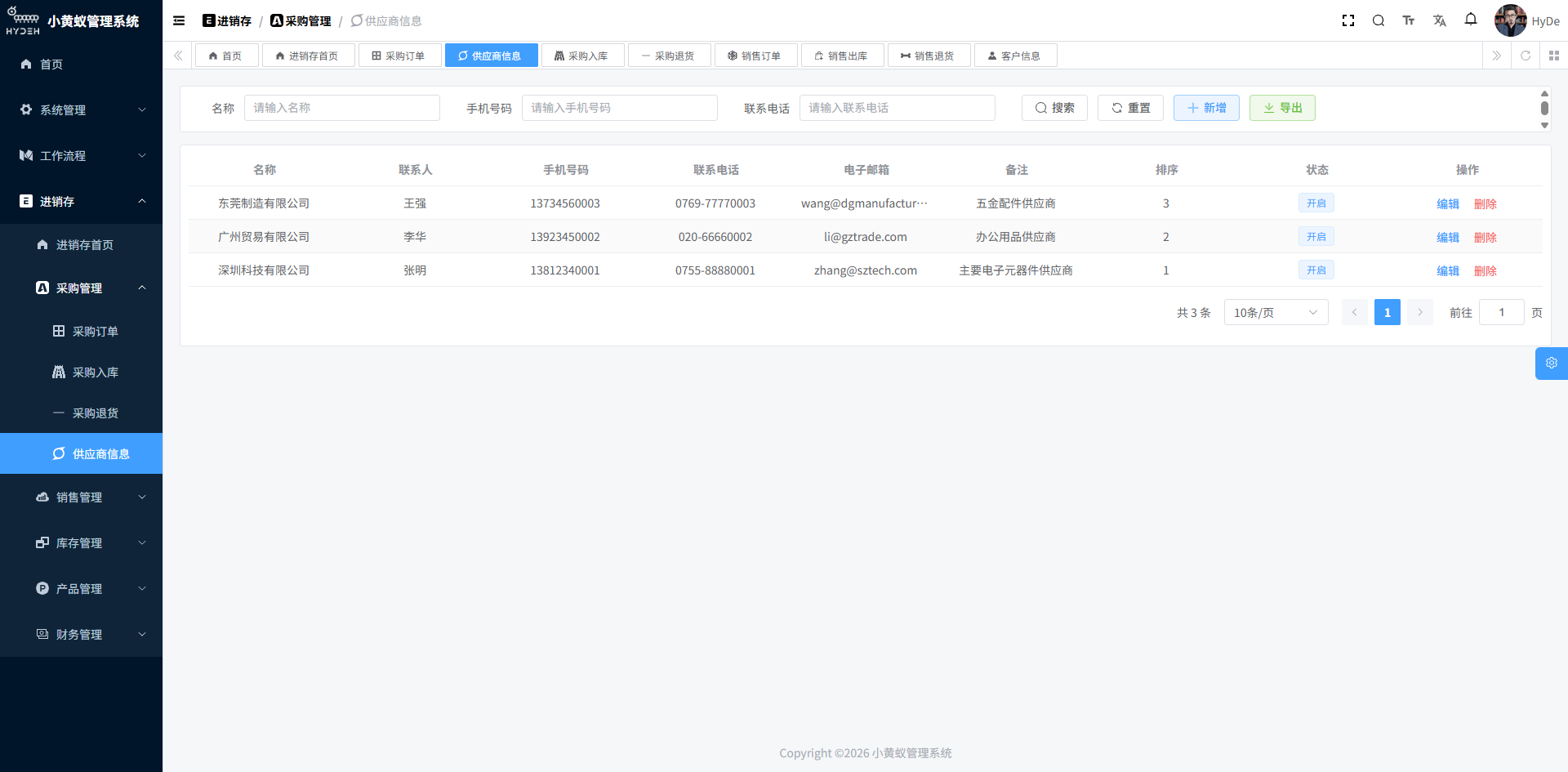
Supplier Management
- Complete supplier profiles (name, contact person, contact details, taxpayer identification number, tax rate, etc.)
- Supplier bank account management (bank name, account number, branch address)
- Supplier status and prioritization management
Purchase Order
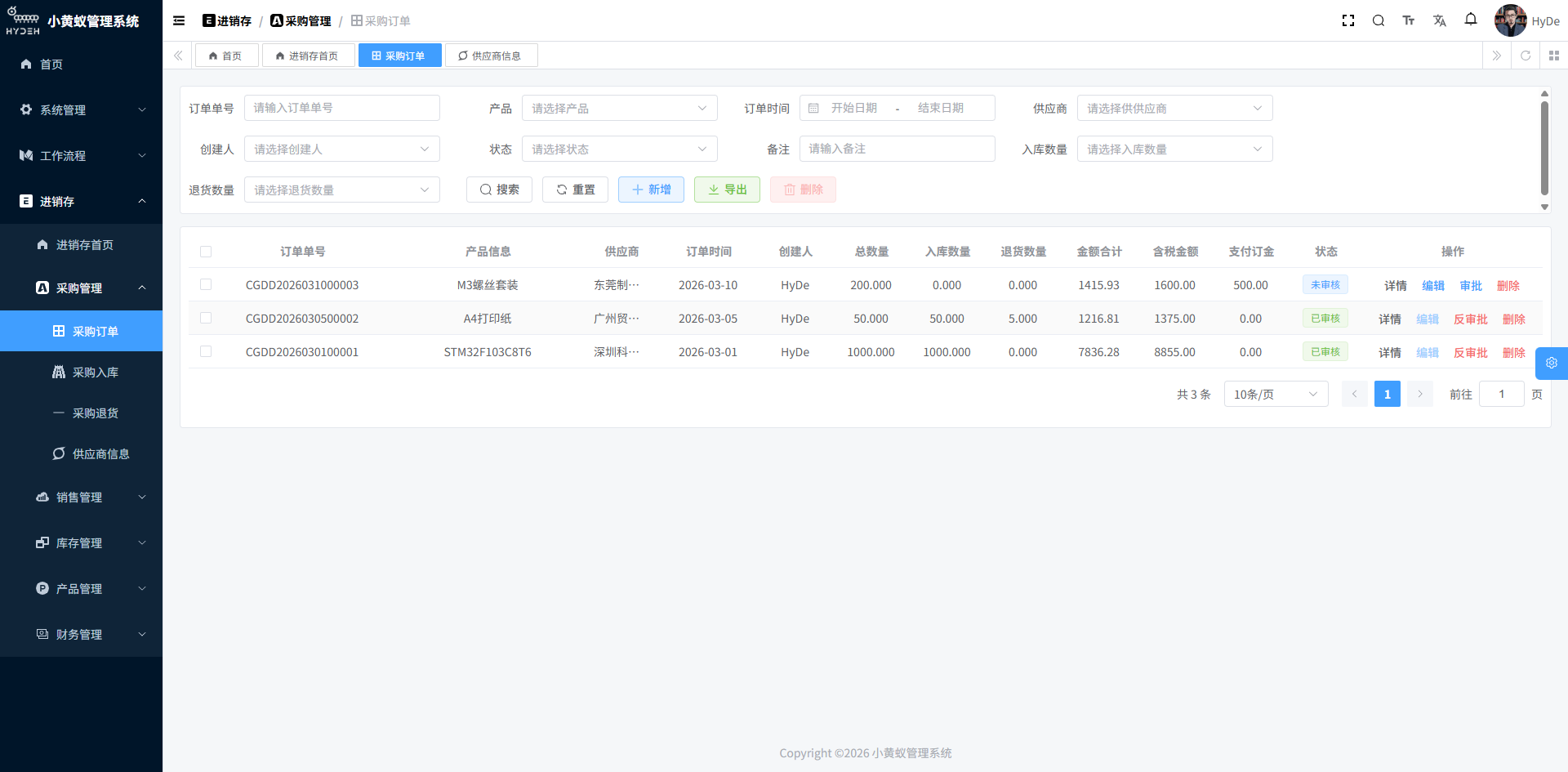
- Auto-generated purchase order number (format:
{prefix}{YYYYMMDD}{6-digit incremental}) - Linked to supplier, recording purchase date and settlement account
- Purchase item details: select product, unit price, quantity, tax rate; total amount calculated automatically
- Purchase status: Pending Approval / Approved, with support for approval and reverse approval
- Tracks received quantity and returned quantity for real-time purchase execution progress
Purchase Receiving
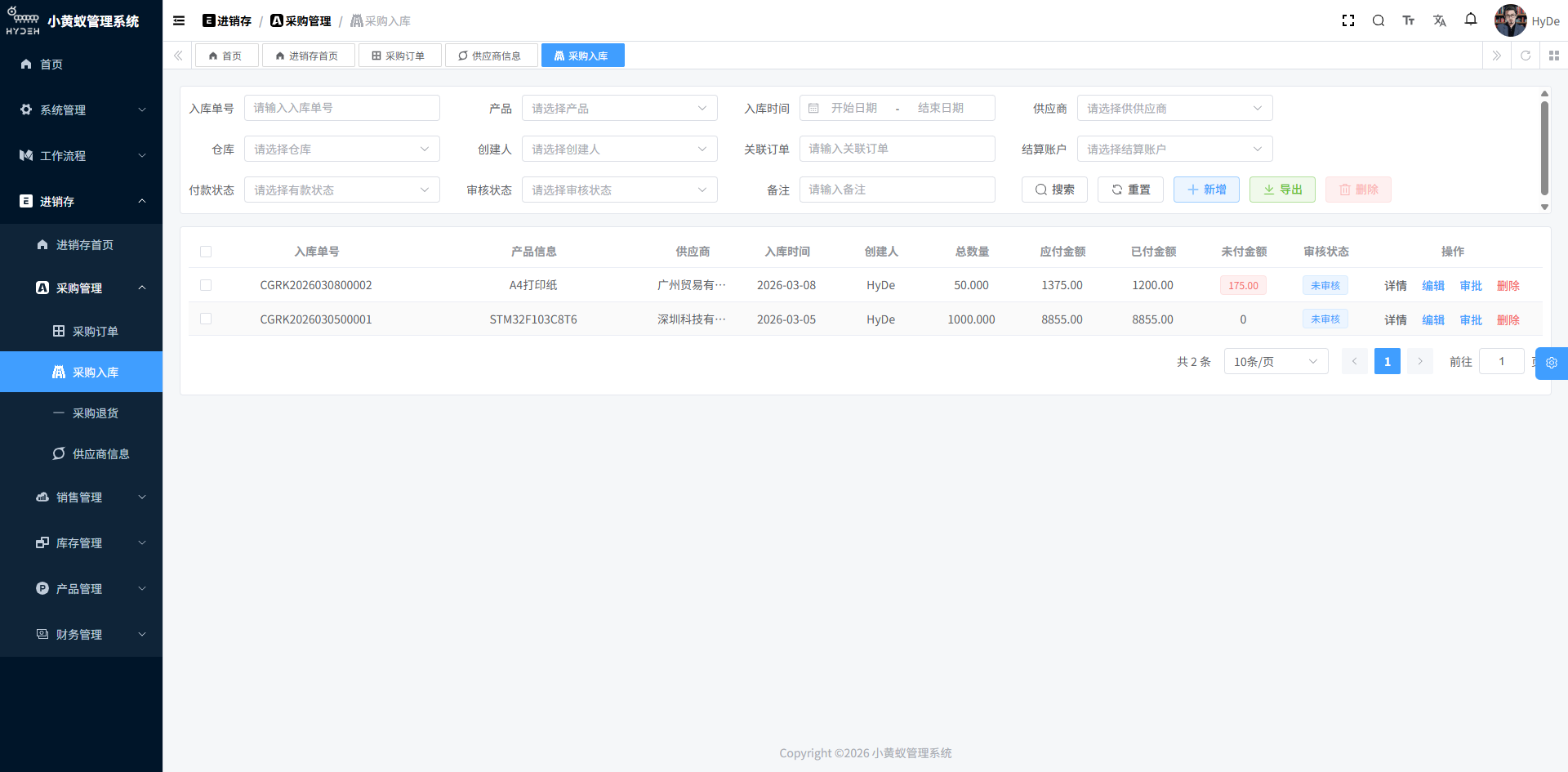
- Receipts are generated based on purchase orders and linked to purchase order line items
- Select the target warehouse; inventory for the corresponding product is increased upon receipt
- Supports complete amount calculation including discounts, tax, and other charges
- Inventory and inventory details are updated automatically upon approval
Purchase Return
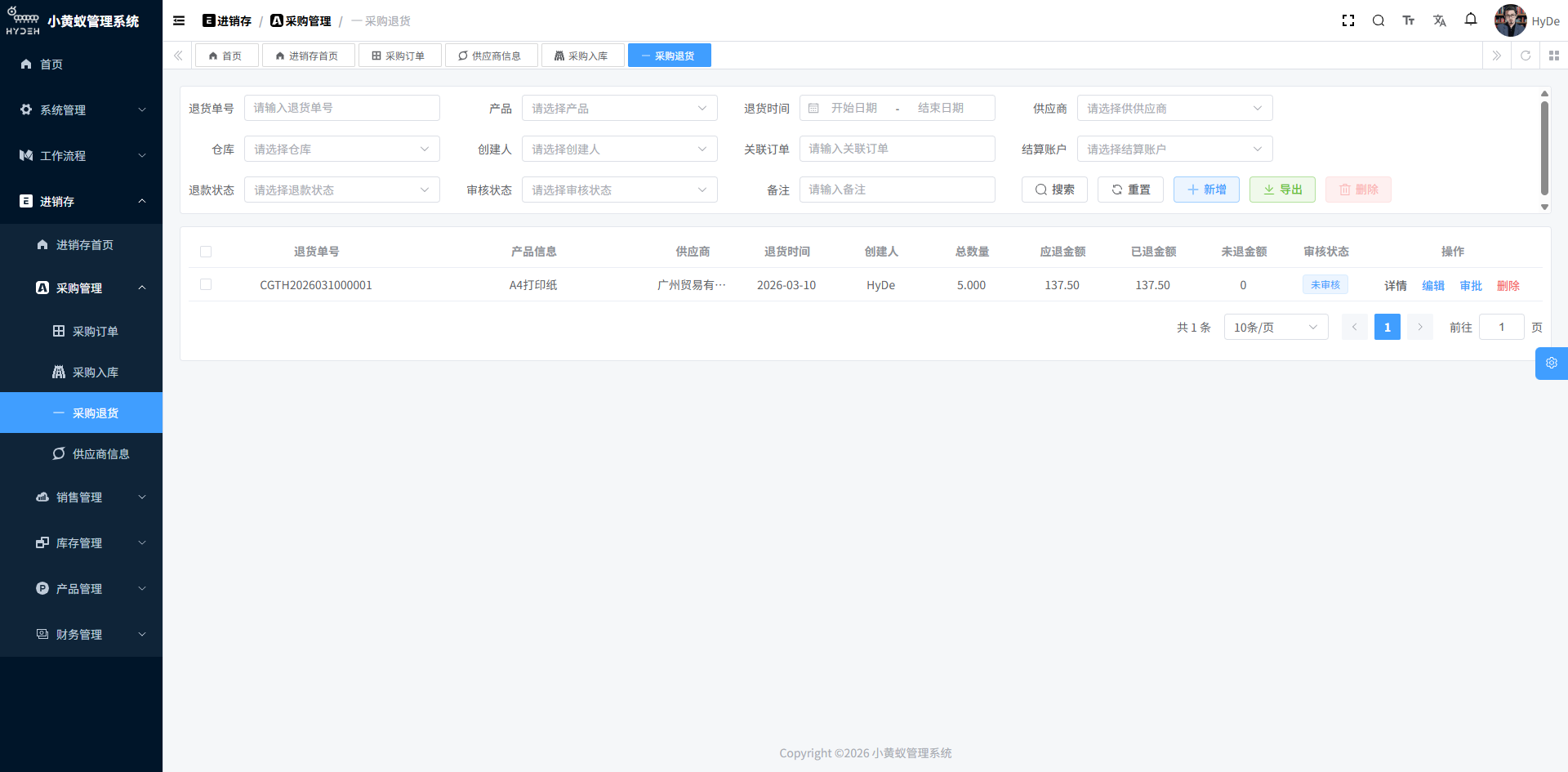
- Initiate returns against purchase orders, linked to original order line items
- Inventory for the corresponding product is decreased upon return
- Supports refund amount tracking to ensure financial compliance
2. Sales Management (Sale)
Sales management mirrors the procurement workflow, covering the complete business chain from customer management to sales orders, shipping, and return-and-refund processing.
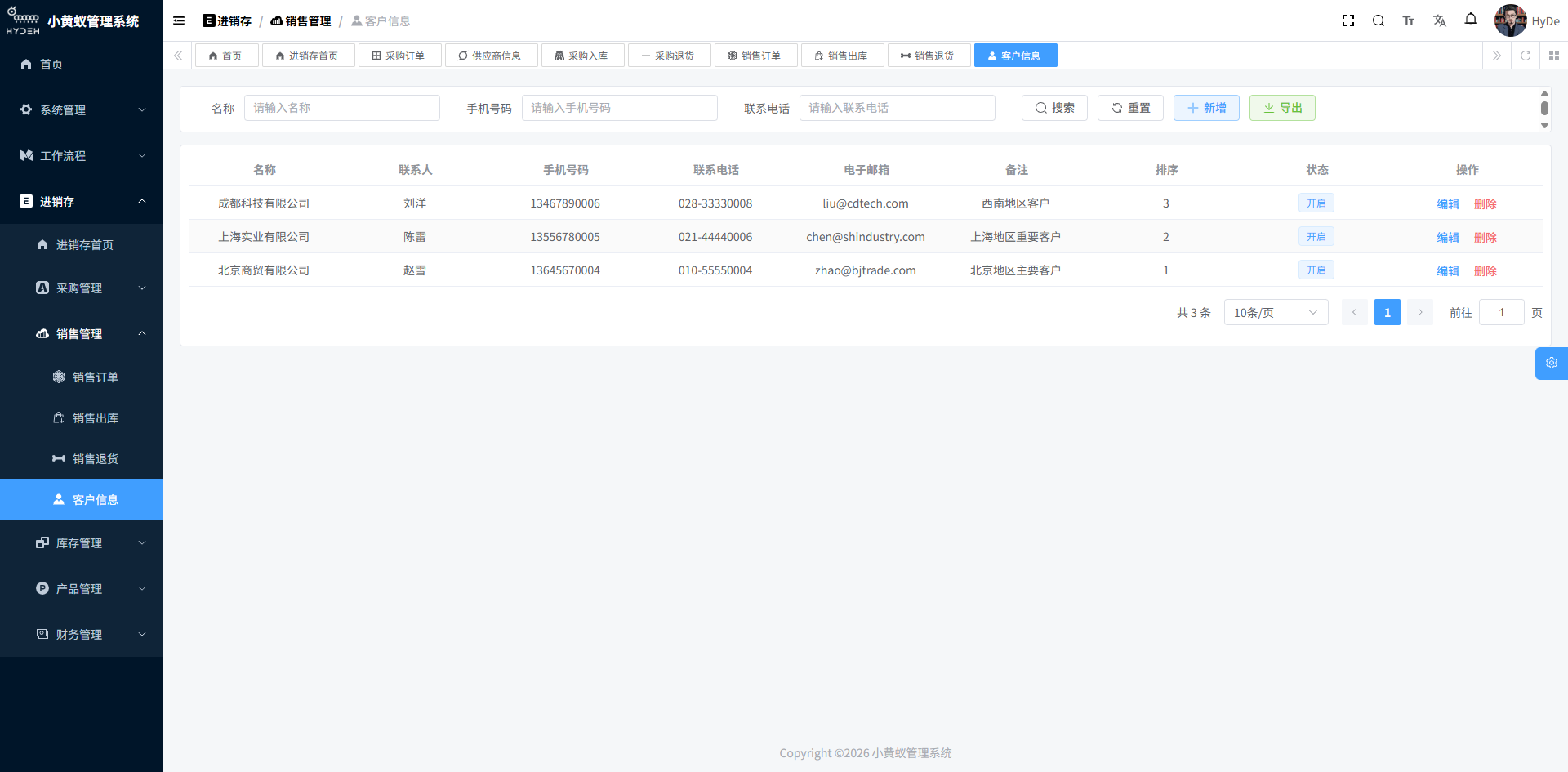
Customer Management
- Complete customer profiles (name, contact person, contact details, taxpayer identification number, etc.)
- Customer bank account management
- Customer status and prioritization management
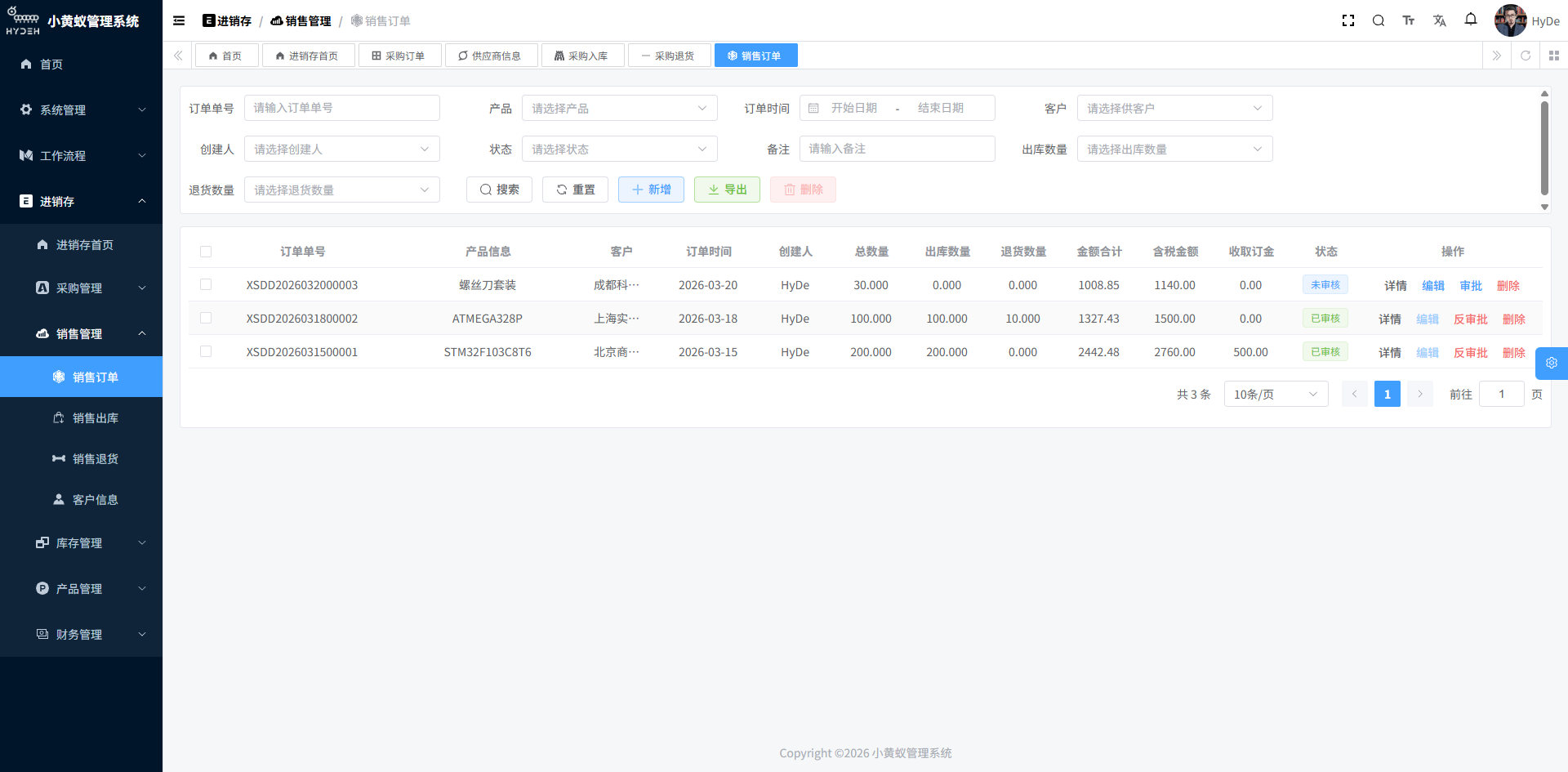
Sales Order
- Auto-generated sales order number
- Linked to customer, recording sales date and settlement account
- Sales item details: select product, unit price, quantity, tax rate; total amount calculated automatically
- Supports approval and reverse approval workflows
- Tracks shipped quantity and returned quantity for real-time sales execution progress
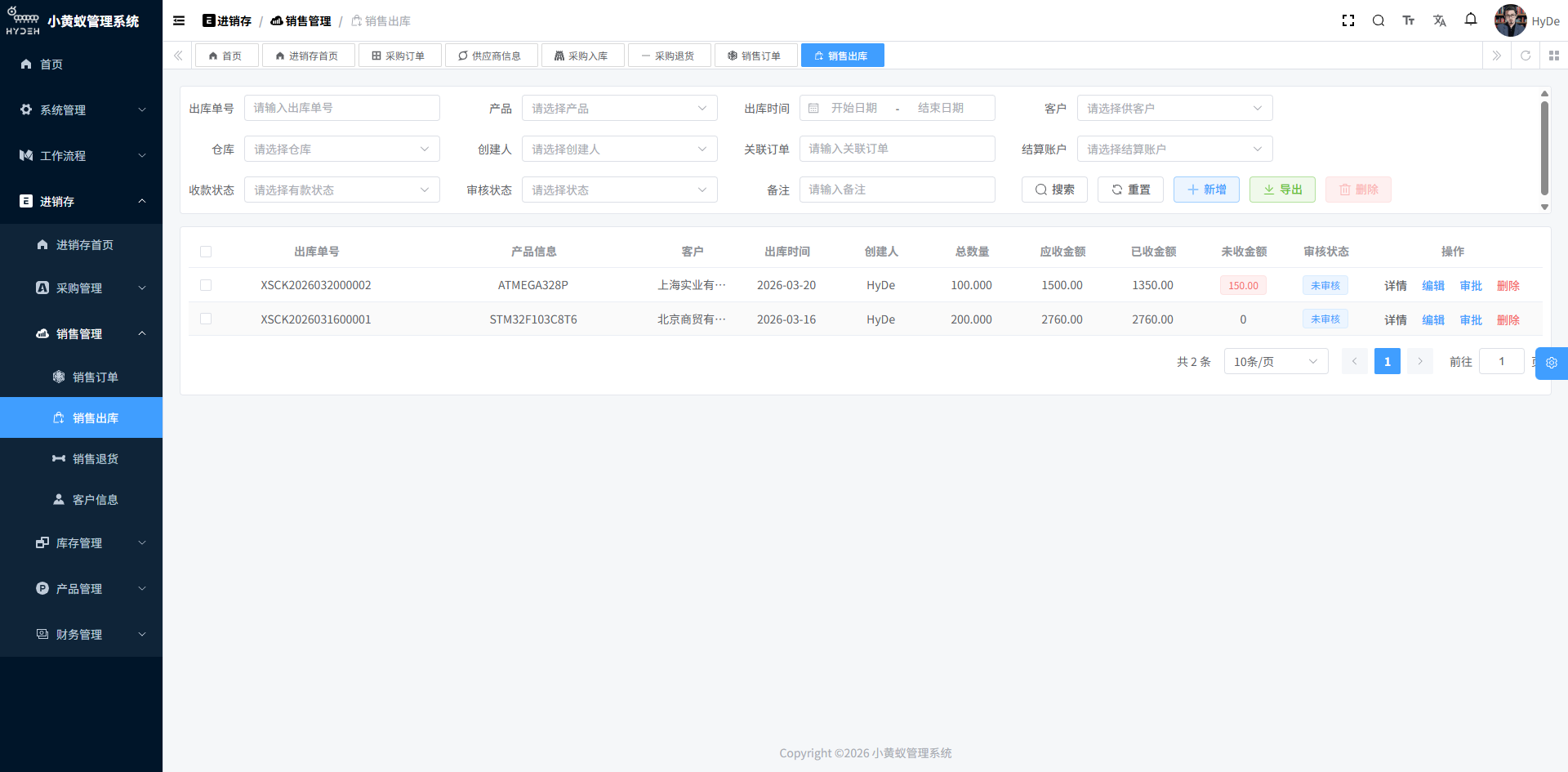
Sales Shipping
- Shipments are generated based on sales orders and linked to sales order line items
- Select the warehouse; inventory for the corresponding product is decreased upon shipment
- Inventory and inventory details are updated automatically upon approval
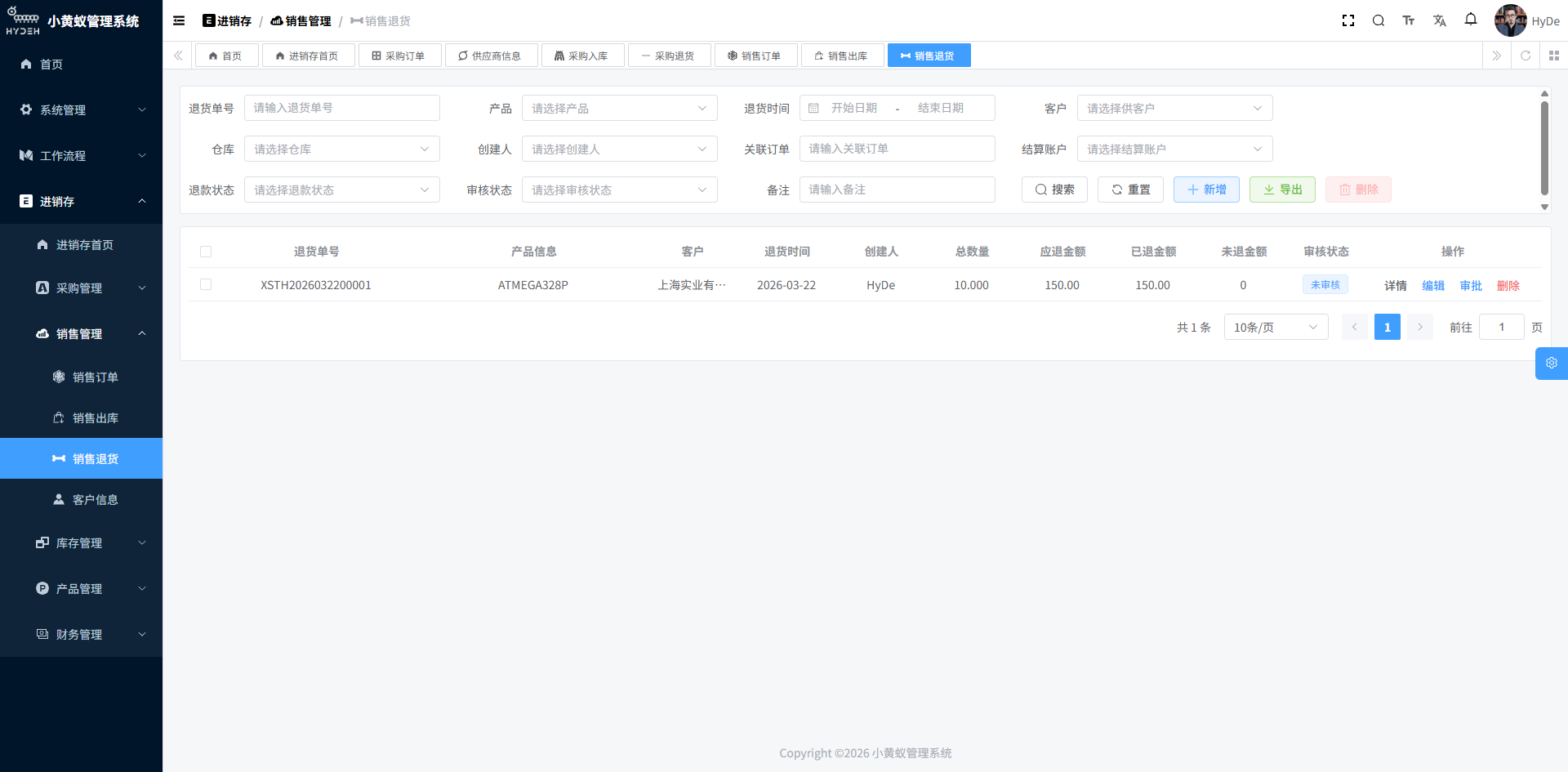
Sales Return
- Initiate returns against sales orders, linked to original order line items
- Inventory for the corresponding product is increased upon return (returned to warehouse)
- Supports refund amount tracking
3. Inventory Management (Stock)
Inventory management is the core of the procurement-sales-inventory system. The system provides comprehensive multi-warehouse inventory capabilities.
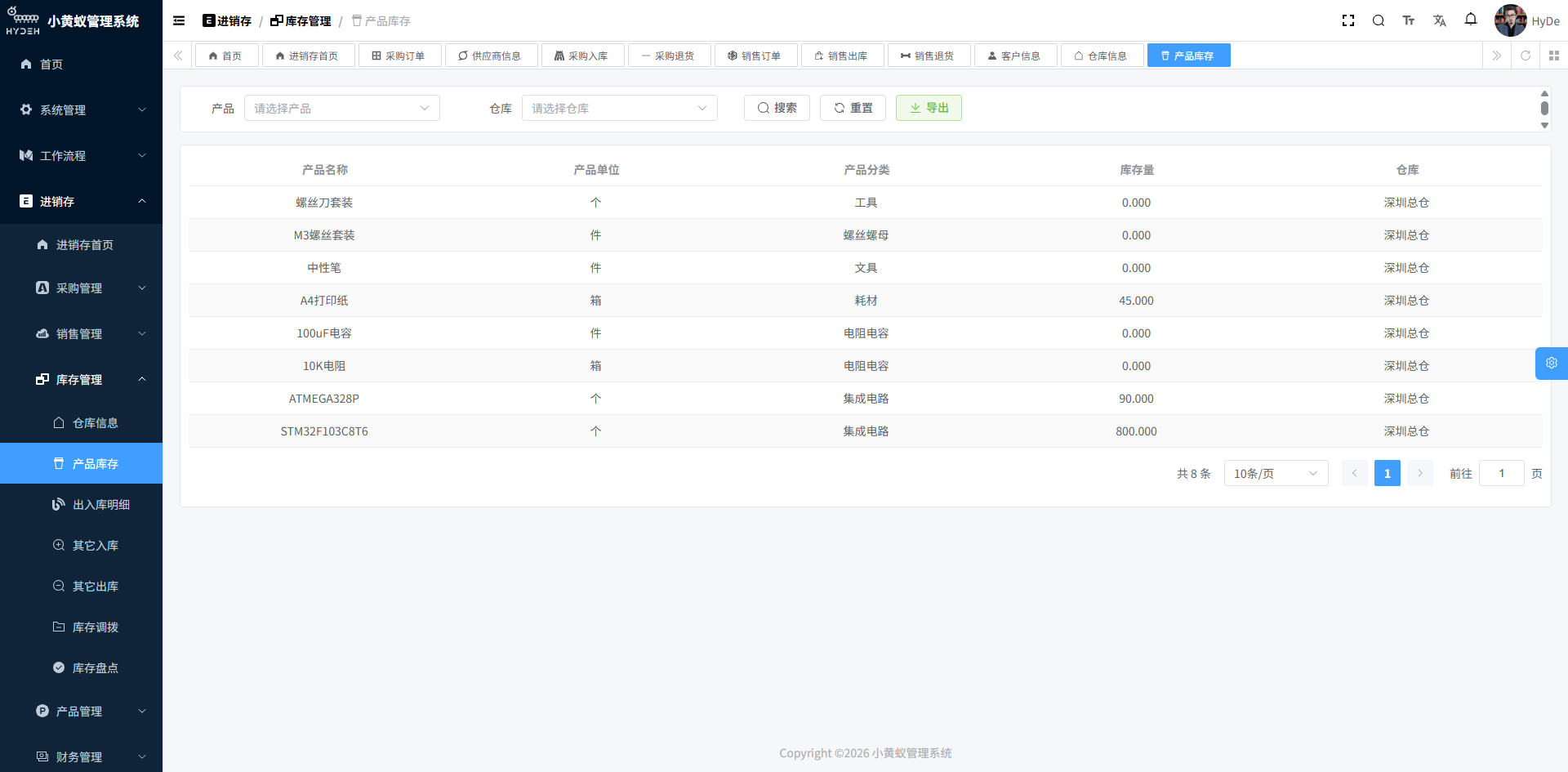
Product Inventory
- Inventory quantities recorded by warehouse and product
- Real-time updates: increased on purchase receiving, decreased on sales shipping
- Supports inventory alerts to prevent stockouts or overstocking
Inventory Details
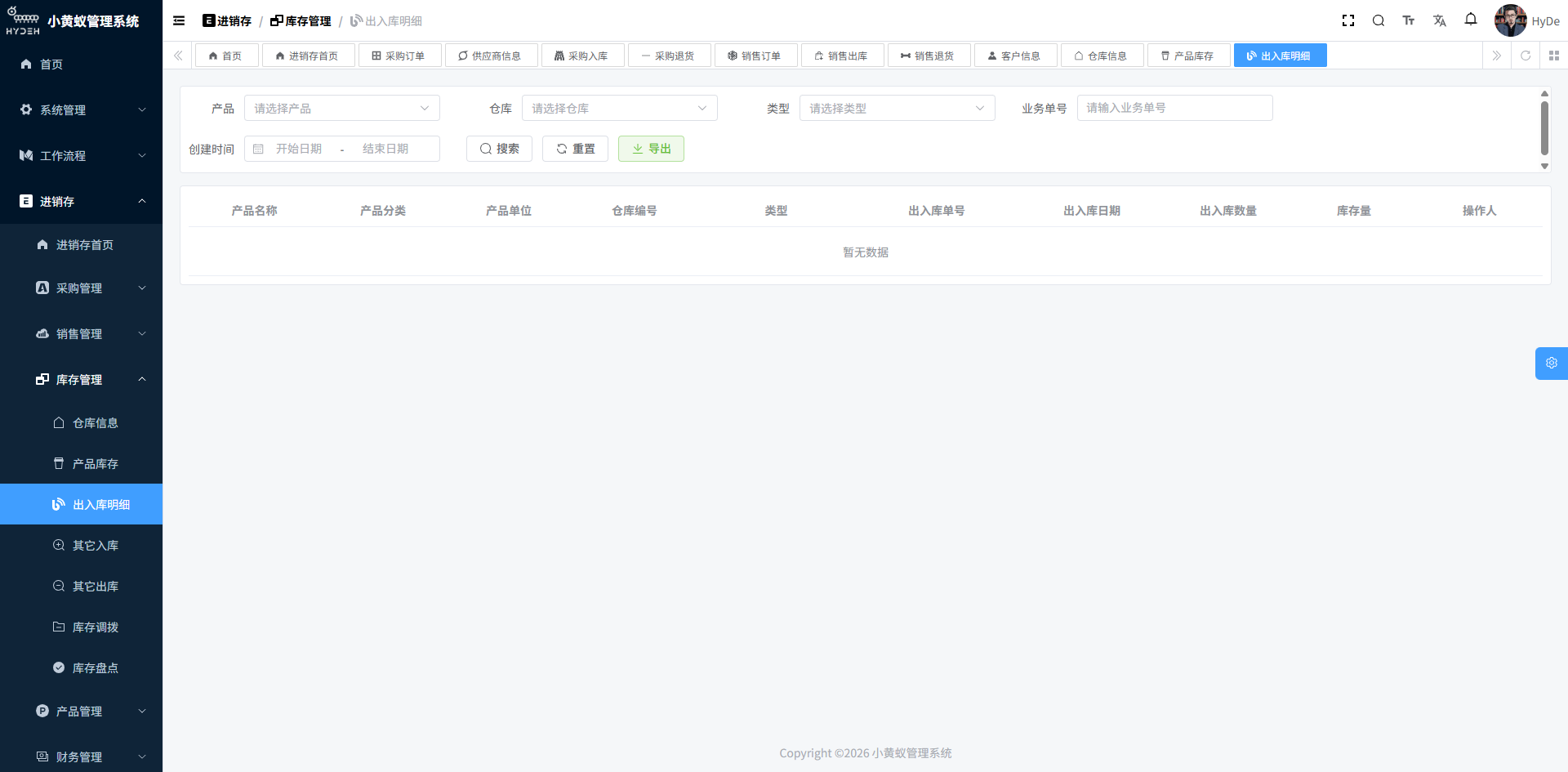
- Records details of every inventory change (receipt number, shipment number, transaction type)
- Full traceability of each inventory change: purchase receiving, sales shipping, returns, transfers, stocktaking
- Supports filtering and querying by warehouse, product, time period, and other dimensions
Warehouse Management
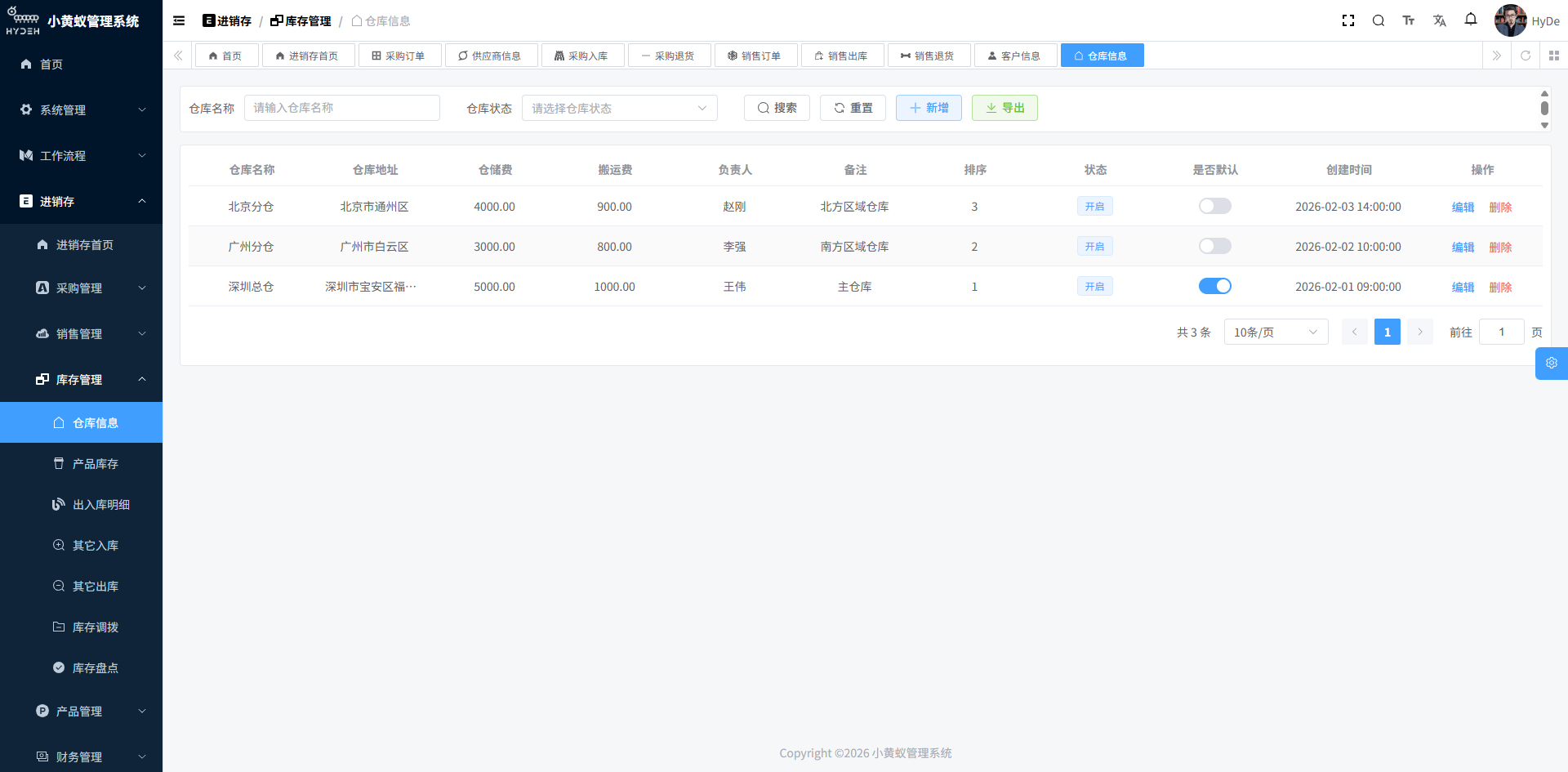
- Multi-warehouse support: create multiple physical or logical warehouses
- Warehouse information: name, address, manager, storage fees, handling fees
- Default warehouse configuration
Inventory Overview
4. Product Management (Product)
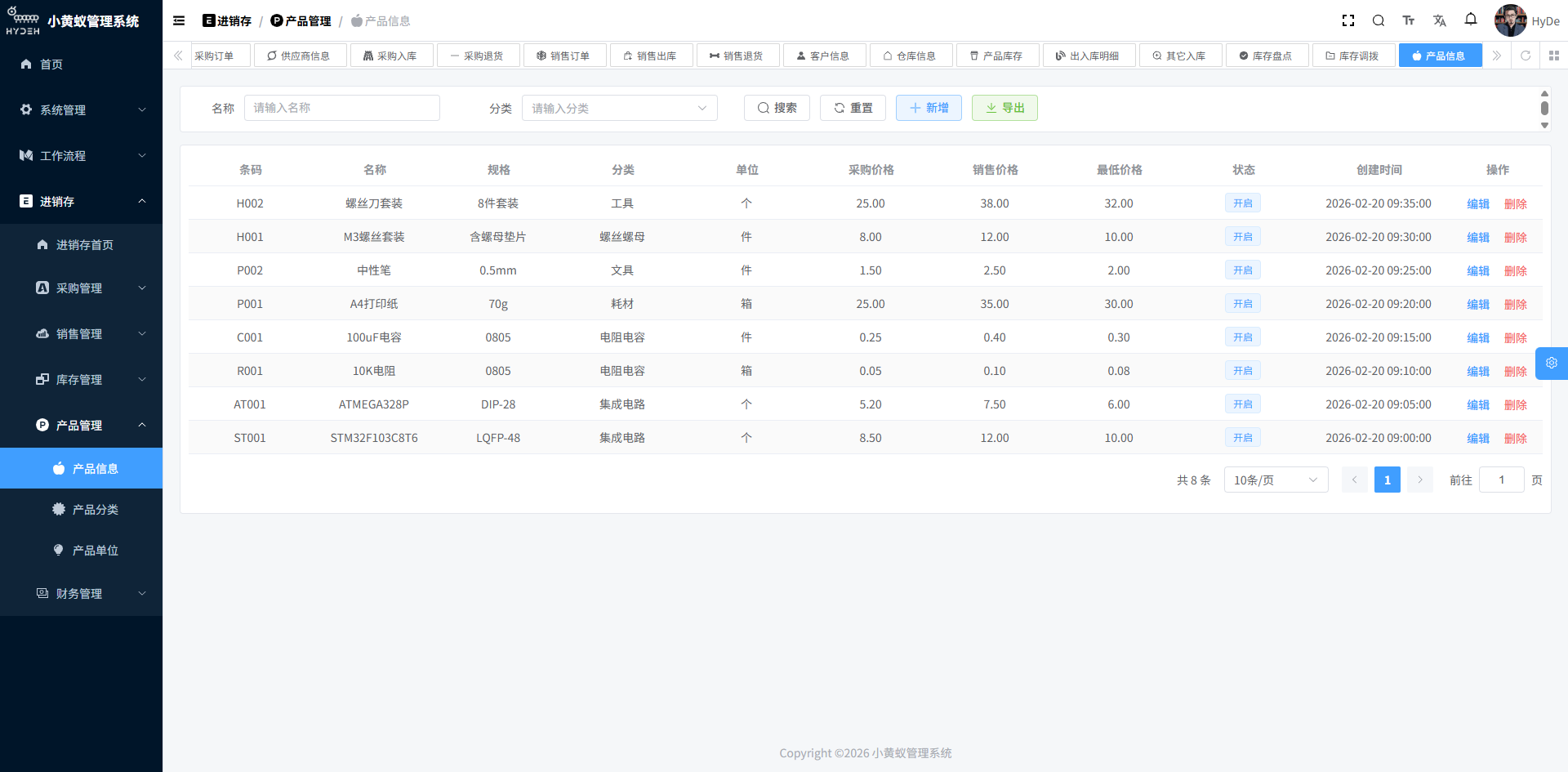
A unified product catalog provides master data for procurement, sales, and inventory modules.
- Product Category: supports multi-level product categories (tree structure) with category coding
- Product Unit: supports multiple units of measurement
- Product Information: complete product records including name, code, specification, price, etc.
5. Finance Management (Finance)
The finance module connects business operations with funds, delivering complete management of procurement payments and sales receipts.
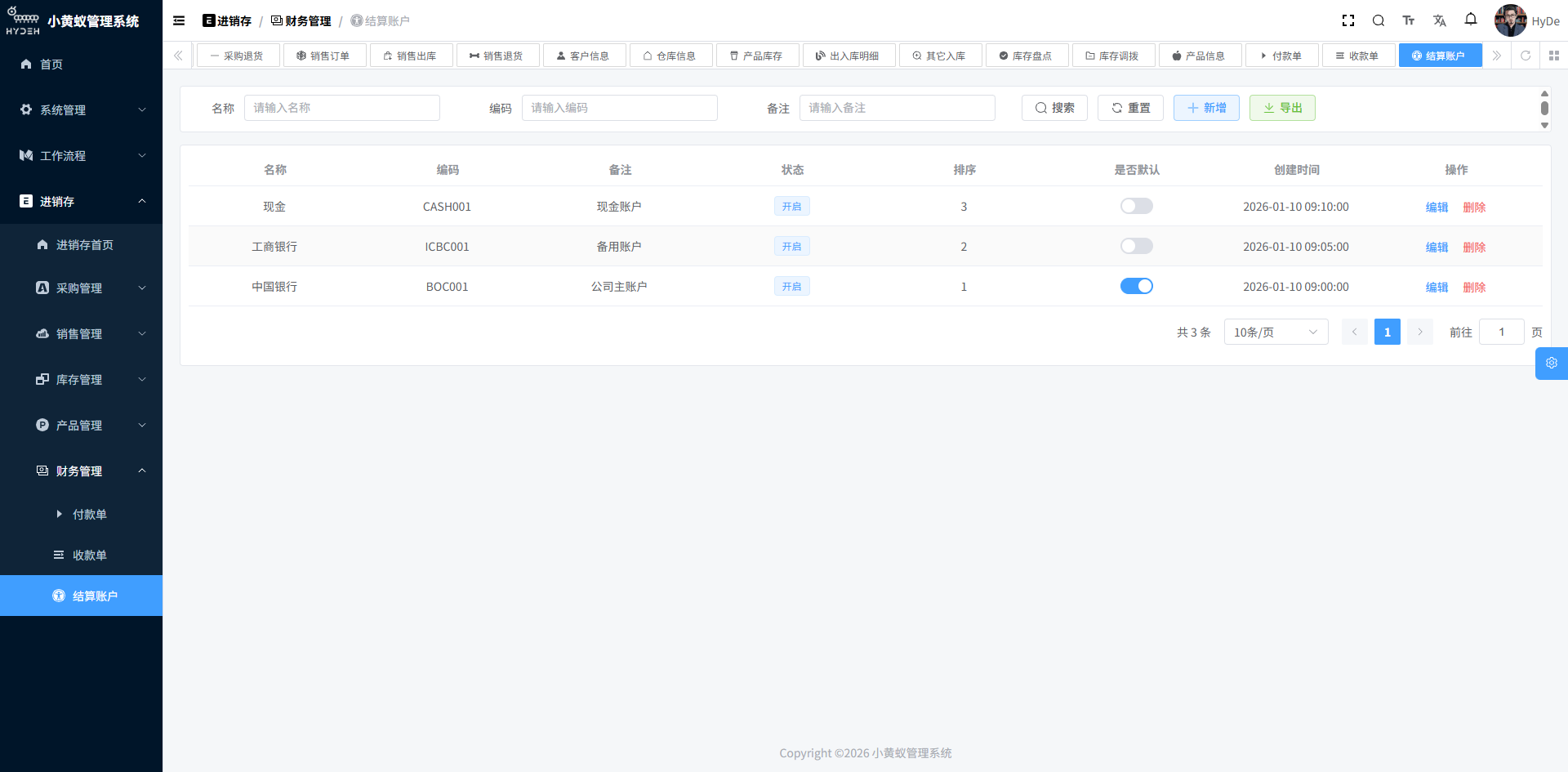
Settlement Account
- Manages settlement accounts between the company and its suppliers/customers
- Account name, code, and status management
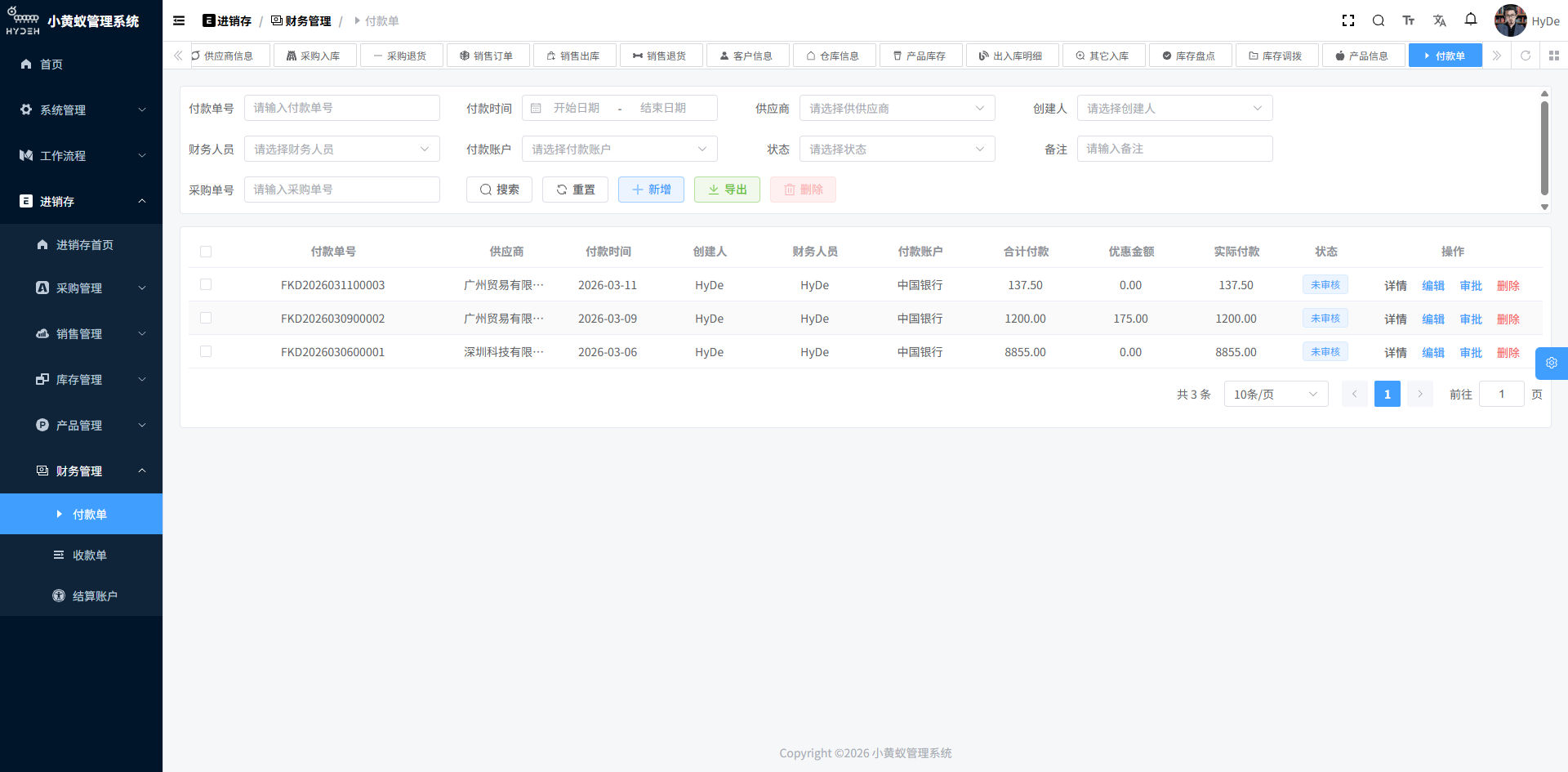
Purchase Payment
- Initiate payments against purchase receiving records
- Linked to settlement account, recording payment amount and payment method
- Tracks paid amount and manages accounts payable
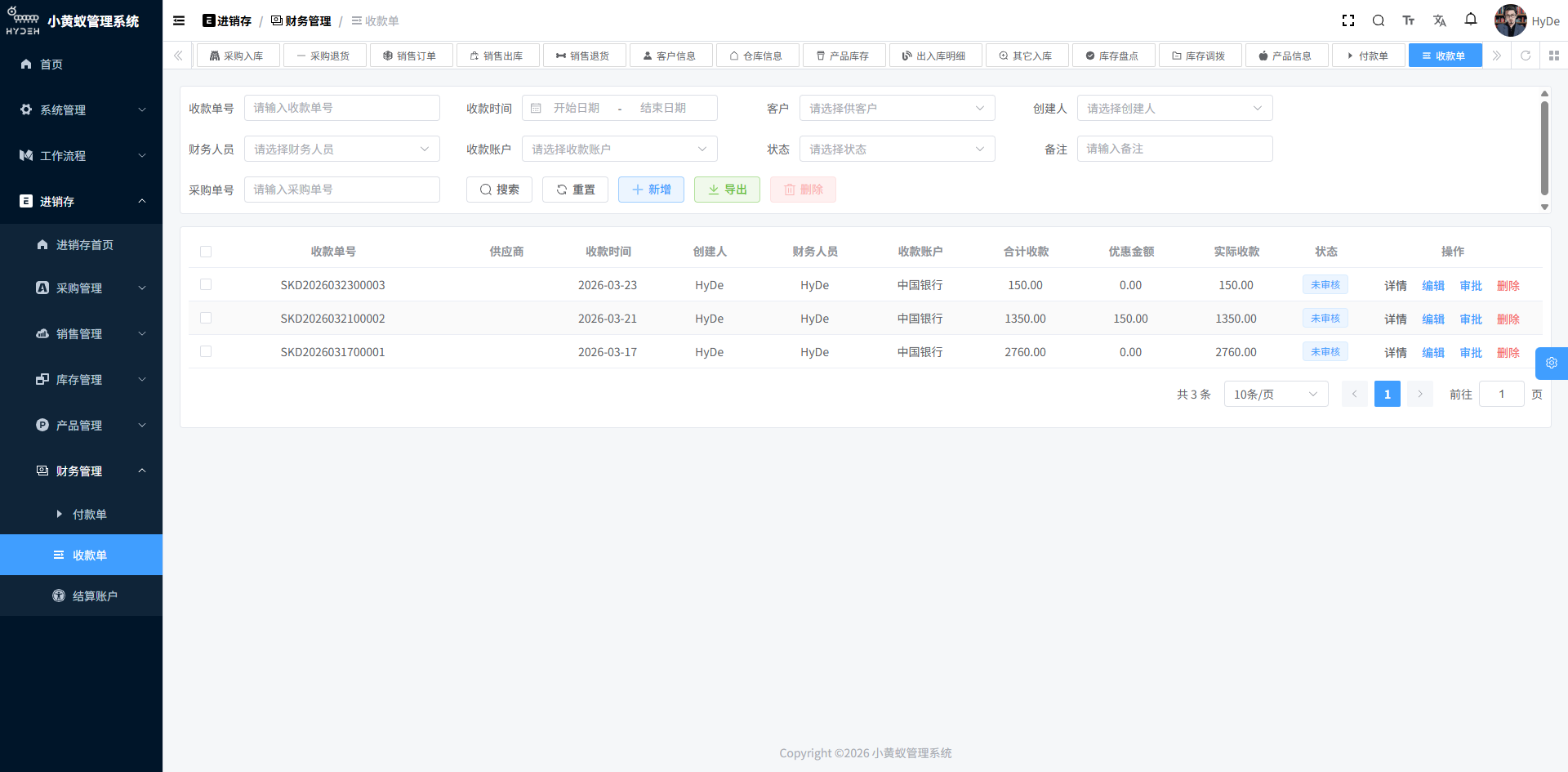
Sales Receipt
- Initiate receipts against sales shipping records
- Linked to settlement account, recording receipt amount and receipt method
- Tracks received amount and manages accounts receivable
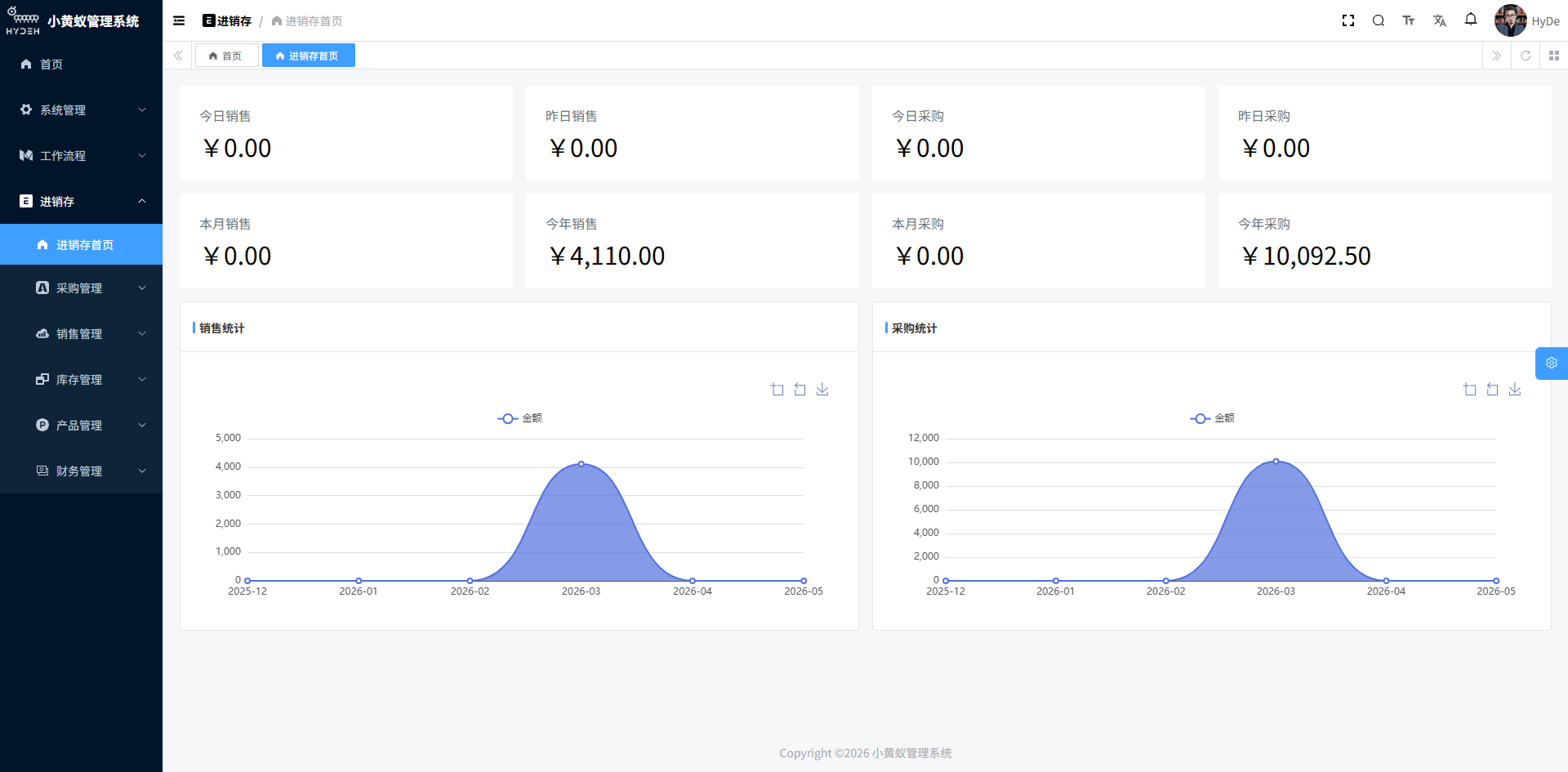
Dashboard Statistics
The system provides an intuitive data dashboard to help managers quickly grasp the company’s operating status:
Tech Stack
Spring Boot + Spring Security + MyBatis Plus
Vue 3 + Element Plus
MySQL / Oracle / PostgreSQL
Procurement / Sales / Inventory / Product / Finance
Monolithic / Spring Cloud Microservices
Supports multi-warehouse and multi-tenant isolation
Online Demo: https://www.hydeh.com/boot/
Tenant: ERP | Username: erptest | Password: erptest
After logging in, navigate to the “ERP System” menu to explore the complete functionality for procurement, sales, inventory, finance, and more.